Press Dry below, then Pedal. Dry, it's a clean electric guitar, polite and a little thin. Through the pedal, it's got teeth: the notes thicken and break up at the edges, and a quick echo slaps back right behind each one, like the guitar is playing in a small, hard room. That combination of grit and slapback echo is the sound of early rock and roll, and the quick tape echo on 1950s records cut at Sun Studio in Memphis made the slapback half of it famous. Guitarists have been chasing it ever since.
Switch between Dry and Pedal. What does each part add: the grit, or the echo?
The finished pedal
Electric Guitar: Andy G. Cohen, CC BY
That's where this project ends up: a pedal with three knobs, Drive, Tone and Echo, that turns a clean guitar into a rock tone, and a short recording of you playing through it. Along the way you'll build each part on its own so you know exactly what every knob is doing.
Before you start: does it matter whether the tone control comes before the drive or after it?
Stage 1: Draw the pedal
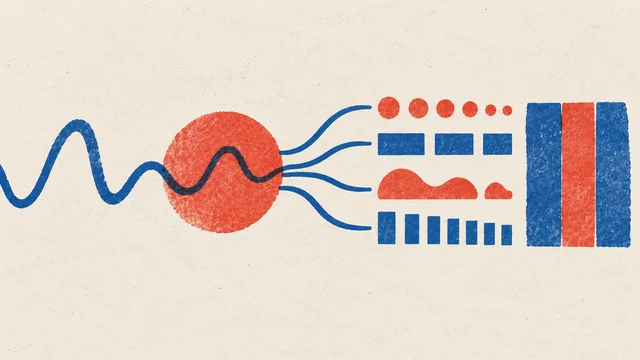
Every pedal is a short chain. Sound goes in, gets shaped, comes out. Ours has three stages.
Inside the pedal
The order matters. Echo goes last because distortion on top of overlapping echoes turns them into mush. Tone is the interesting one, which you'll hear in Stage 2.
Checkpoint: you can say in one sentence what each stage is for. Tone shapes the brightness, Drive adds grit, Echo adds the slapback room. Signal flow explains why the order changes the sound.
Stage 2: Decide what Tone is for
A drive pedal's tone knob usually has one job: tame the fizzy top end that distortion creates, without making the guitar dull. Start by hearing what the EQ does on its own.
Turn High down a few dB, then move High Freq. Where does the cut take off harshness without making the guitar sound like a blanket is over it?
Set the tone
Electric Guitar: Andy G. Cohen, CC BY
Cut High by a few dB and slide High Freq around. Low settings muffle the guitar; higher ones only take the edge off. A touch of Mid makes it push forward, which is why so many classic overdrives have a mid hump. Now you've found where the guitar's brightness lives.
Here's the answer to the order question. Distortion creates new harmonics. A tone cut before drive changes what the drive bites into, so the grit itself comes out smoother. A cut after drive leaves the grit as it is and tames the result. Neither is wrong, and many classic overdrives shape the tone both before and after the clipping, which is part of why they sound warm rather than fizzy.
Checkpoint: you've chosen a High cut and split point you like. EQ shows how to keep a cut tied to the problem you hear.
Stage 3: Add drive without letting volume fool you
Distortion makes things louder, and louder always sounds better at first. The lab below shows how much louder Drive is than Dry, so you can tell the grit from the volume.
Raise Amount slowly. Where does the guitar go from warm to gritty to fuzzy, and which one suits a riff?
Find the grit
Electric Guitar: Andy G. Cohen, CC BY
Raise Amount slowly. First the notes thicken, then chords start to break up at the edges, then everything turns into sustaining fuzz. As the curve beside the lab bends further from the diagonal, it rounds the wave's peaks off more, creating new harmonics. Lower Mix to blend some clean guitar back in. Now picking dynamics come through again: play softly and it cleans up, dig in and it growls.
Checkpoint: you've chosen a drive setting for one job, say "crunchy rhythm chords" or "singing lead". Distortion explains why drive changes more than a volume number.
Stage 4: Put a slapback behind it
Slapback is a single, quick echo, roughly 60 to 120 milliseconds after the note. It's too fast to hear as a rhythm; instead it makes the guitar sound bigger and livelier, as if it's bouncing off a nearby wall. That's the sound of Sun Studio rockabilly.
Move Time between 60 and 200 ms. Where does the echo stop sounding like a room and start sounding like a second guitar?
One quick echo
Electric Guitar: Andy G. Cohen, CC BY
Keep Feedback low so there's essentially one repeat. Move Time: under about 40 ms the echo blends into the note and you hear thickness; around 60 to 120 ms it is a distinct but very quick slap; much longer and you hear a separate copy. Set Mix so you'd miss the echo if it disappeared but wouldn't point to it. Now the guitar sounds like it's in a room with you.
Checkpoint: you have a slapback you like. Delay and echo shows how the same effect becomes a rhythm at longer times.
Stage 5: Play it and record it
Go back to the finished pedal at the top. It's the same three ideas in one box: Drive is your grit, Tone tames the top after it, Echo is the slapback amount. Set the three knobs to match what you chose in Stages 2 to 4.
Now play. If you have a guitar and an audio interface, run your own playing through the same settings in your recording software and record a short riff, eight bars is plenty. Something with a few muted chugs, an open chord ringing out and a gap at the end, so you can hear the attack, the sustain and the echo tail. If you don't play guitar, the phrase in the lab is your demo.
Checkpoint: you have a recording of a riff through your pedal, with its echo tail intact at the end. This is the thing to show a friend.
Stage 6: Name your pedal
Write the pedal's settings on one line, the way a pedal maker would print a sample setting on the box: "Drive at 2 o'clock, Tone at noon, Echo low." Give it a name. It sounds like a small thing, but naming it fixes your decisions: you'll know exactly where to start next time, and you'll notice when a new song needs something different.
If you want to go further and build it as a single real effect with your own code, Build an effect starts from a drive-and-tone starter project; adding the echo is your first extension. And if what you want is the sound of a pedal you already own, Neural amps and captured gear explains how a model learns one from recordings, and why its knobs are the hard part.
Try it on bass
Bass players use drive too, but they have a problem guitarists don't: drive thins out the low end. The fix is a blend.
Lower Mix from 1 toward 0.4. When does the bass keep its weight while still getting the growl on top?
Drive a bass
Isolated Bass: The Joy Drops, CC BY
Bring Mix down until the round low end comes back underneath the growl. Now the bass cuts through on small speakers without losing its weight. That's the same pedal, adapted: the second source shows you which settings travel and which need rethinking.
Quick check
- Your driven chords sound fizzy and harsh. Do you turn Drive down, or Tone? Try Tone first. Fizz is mostly the high harmonics the drive created; taming them keeps the grit. Turning Drive down also works, but you lose the crunch you wanted.
- The slapback sounds like a second guitarist playing slightly late. What do you change? Shorten Time. Around 60 to 120 ms the echo is a quick slap that adds size; longer, it separates into a distinct second copy.
- You put the echo before the drive and everything turns to mush. Why? The drive is now distorting the original and its echoes together, so they smear into each other. With echo last, each repeat is a clean copy of the driven note.
Next steps
- Shape it: Controls, macros and ranges. Make three controls express the musical jobs you chose for the pedal.
- Use it: Low end. Keep the bass version heavy on every speaker.