Modelled bronze instruments with flexible tuning.
AvailableInstrumentExperimental
Tricorda
An editable physical-model piano with three ringing strings.
About
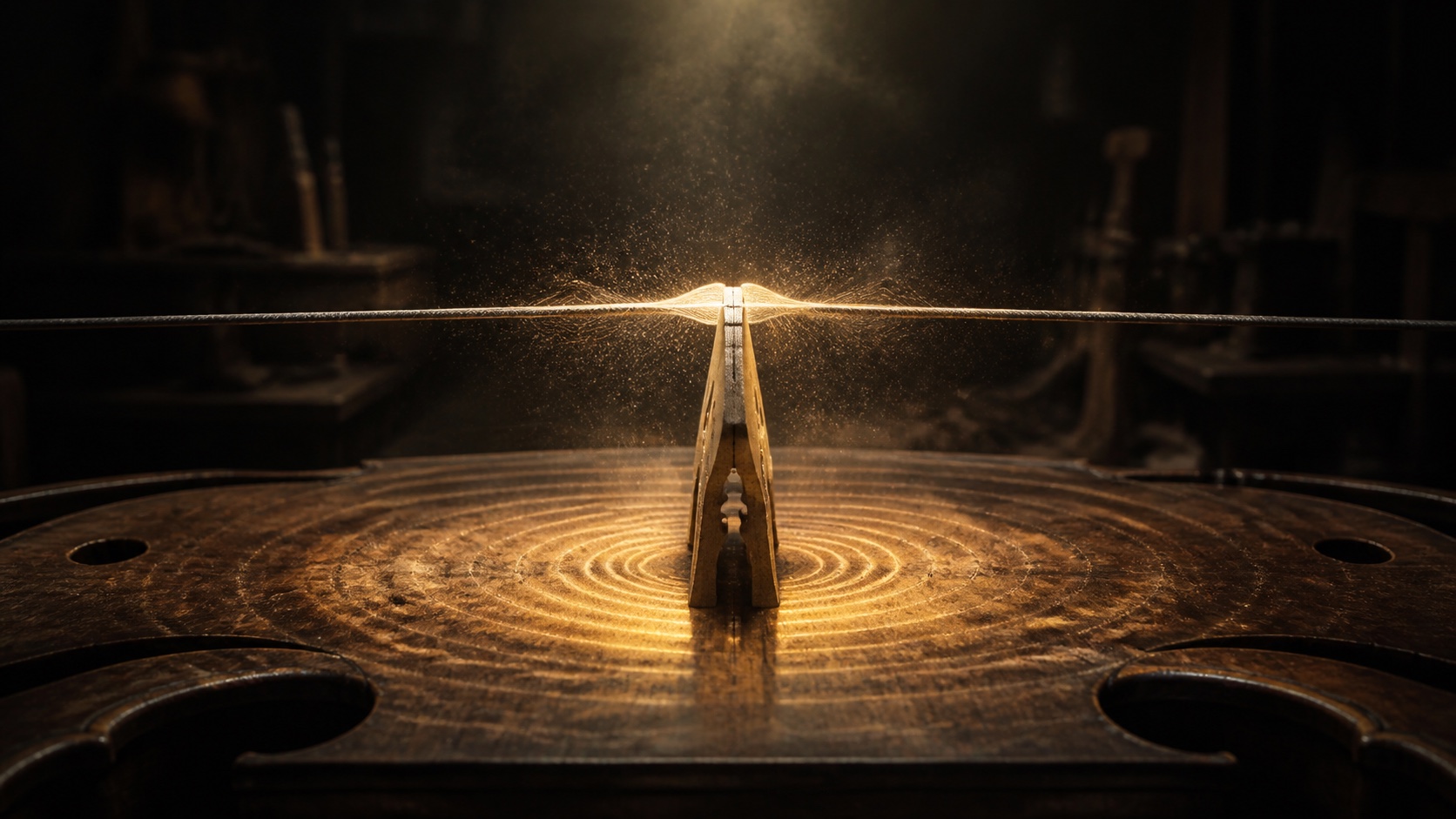
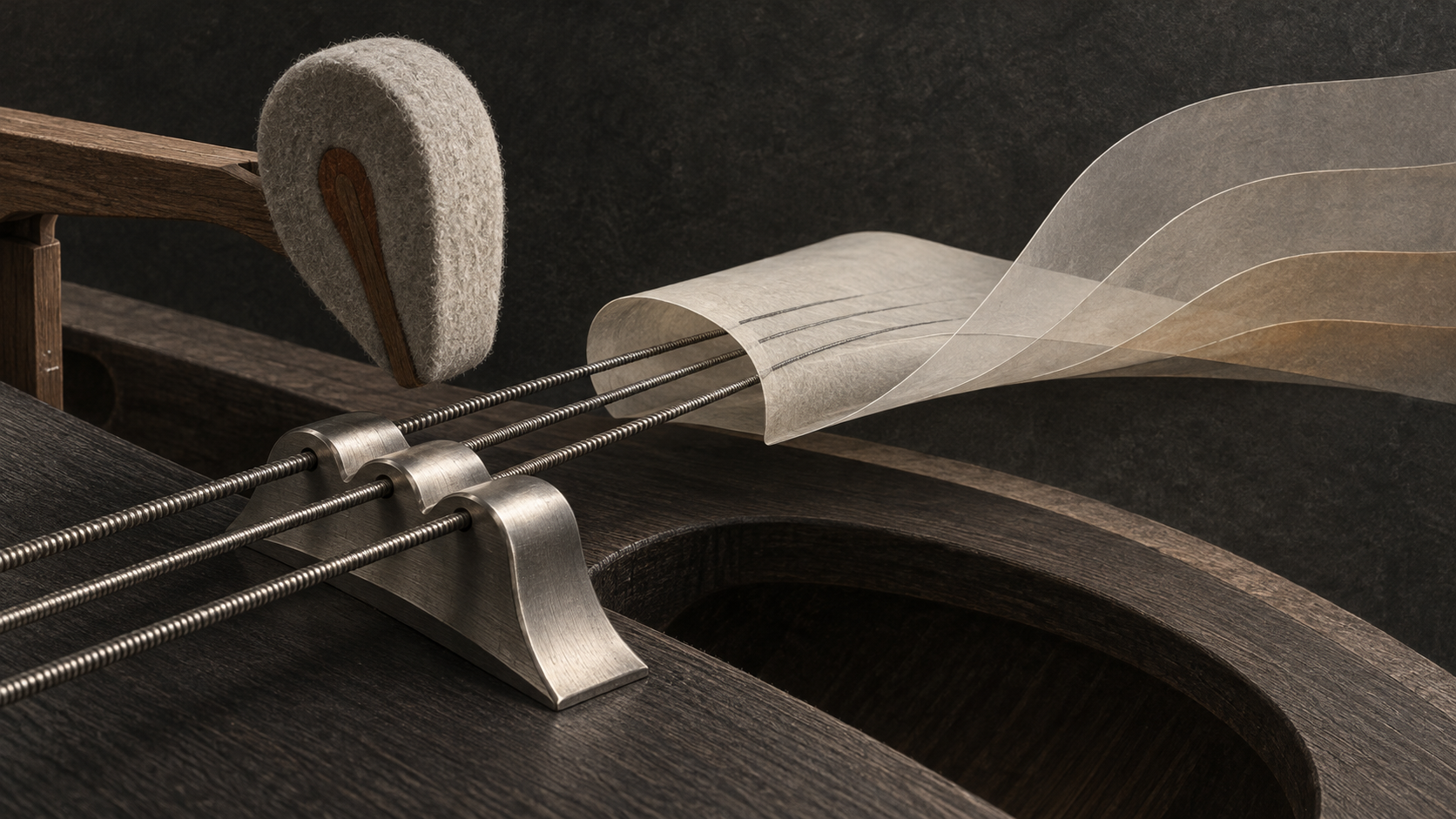
Tricorda is a reduced physical model for exploring the parts of a piano that are useful to play with: a stiff string, a felt contact, detuned unisons, sympathetic resonance, and the changing colour of a lid, body, and room. It is deliberately an eight-note experiment rather than a claim to reproduce a full grand piano.
The instrument keeps two model families side by side. Waveguide mode gives the strings a dispersive loop; modal mode makes the three-string load explicit and can compare independent motion with a shared bridge. Both use the same schema, presets, and host-owned performance controls.
Reference recordings and fitting studies guide the current factory sounds, but the browser release remains an experimental source-Processor build. Native, WASM, and measured full-register piano claims stay separate until their releases are qualified.
How it works.
Each strike snapshots the current tuning, hammer, loss, and body settings into a bounded polyphonic voice. The string recipe computes the note's stretched fundamental and partials, then sends the struck energy through either a dispersive waveguide loop or a modal bank.
Three detuned strings are summed with symmetric stereo placement. The shared-load modal option contracts their common motion while leaving differential motion to beat, which creates a bridge-coupled comparison without pretending to be a full piano bridge impedance model.
Sustain, half-pedal damping, sympathetic strings, duplex resonances, body modes, lid filtering, and optional Room or Plate ambience remain separate layers around the core string voice. Hosts still own MIDI, devices, state, and execution scheduling.
What would you make with Tricorda?
Describe what you want to make. Build it with the Studio agent.